

Dublin Rental Yields by Area 2026: Where Investors Get the Best Returns
Data-driven analysis of Dublin rental yields by area, combining Property Price Register sales data with RTB Rent Register rental comparables to calculate gross yields across every Dublin district.
The question every Dublin property investor asks: where do the numbers actually work? With house prices averaging over €536,000 and rents at €2,230/month for new tenancies, the maths of buy-to-let in Dublin ranges from borderline to surprisingly decent — depending entirely on where you buy.
We combined two data sources that no other Irish property site brings together: the Property Price Register (200,000+ Dublin sales transactions) and the brand-new RTB Rent Register (launched March 2026, containing actual registered rents by area). The result is the most data-driven rental yield analysis available for Dublin.
No estate agent projections. No “asking rent” estimates from listing sites. Just what people actually paid for properties and what tenants are actually paying in rent.
How We Calculate Rental Yield
Gross rental yield is straightforward:
Gross Yield = (Annual Rent ÷ Purchase Price) × 100
We use:
- Purchase prices from the Property Price Register (PPR) — the actual prices paid, not asking prices
- Monthly rents from the RTB Rent Register — actual registered rents filed with the Residential Tenancies Board, not Daft.ie listing prices
This is important. Listing prices on Daft.ie tend to run 5-15% higher than what tenants actually pay after negotiations and adjustments. The RTB register captures what’s in the lease agreement — the real number.
A Note on Net Yields
Gross yield is the headline number, but your actual return will be lower. After accounting for:
- Mortgage interest (if leveraged)
- Local Property Tax (LPT)
- Insurance (landlord policy)
- Management fees (if using an agent, typically 7-10% of rent)
- Maintenance and repairs (budget 1-2% of property value annually)
- Void periods (vacancy between tenancies)
- Income tax (rental income taxed at marginal rate, up to 52%)
Net yields in Dublin typically run 2-3 percentage points below gross. A 5% gross yield might deliver 2-3% net after costs — or less if you’re paying a mortgage. We’ll focus on gross yields here as the universal comparison metric, but keep the cost stack in mind.
Dublin Rental Yields by District: The Full Picture
Here’s the yield league table for Dublin, ranked from highest to lowest gross yield. We map RTB Rent Register areas (Local Electoral Areas) to postal districts using geographic boundaries.
Highest-Yielding Areas
| District / Area | Median House Price | Avg Monthly Rent (3-bed house) | Gross Yield | Notes |
|---|---|---|---|---|
| Dublin 10 (Ballyfermot) | €226,000 | €1,646 | 8.7% | Strongest yield in Dublin by far |
| Dublin 11 (Finglas) | €246,000 | €1,715 | 8.4% | High yield + 8.4% price growth |
| Dublin 12 (Drimnagh, Crumlin) | €324,000 | €1,646 | 6.1% | Solid yield with 8.4% capital appreciation |
| Dublin 7 (Cabra, Phibsborough) | €330,000 | €2,161 | 7.9% | Gentrification powerhouse |
| Dublin 1 (North Inner City) | €275,000 | €2,332 | 10.2% | Highest gross yield — but caveats apply |
| Dublin 8 (Kilmainham, Inchicore) | €305,000 | €2,332 | 9.2% | Strong inner city yield |
| Dublin 9 (Glasnevin, Drumcondra) | €355,500 | €2,161 | 7.3% | Established area, reliable demand |
Mid-Range Yields
| District / Area | Median House Price | Avg Monthly Rent (3-bed house) | Gross Yield | Notes |
|---|---|---|---|---|
| Dublin 3 (Clontarf) | €403,881 | €2,176 | 6.5% | Strong area with premium tenants |
| Dublin 5 (Raheny, Artane) | €385,000 | ~€2,100* | 6.5% | Family-friendly, reliable |
| Dublin 6W (Terenure, Harold’s Cross) | €520,000 | €2,463 | 5.7% | South-side premium location |
| Dublin 6 (Ranelagh, Rathmines) | €595,000 | €2,463 | 5.0% | High rents but very high prices |
Lower-Yielding Premium Areas
| District / Area | Median House Price | Avg Monthly Rent (3-bed house) | Gross Yield | Notes |
|---|---|---|---|---|
| Dublin 4 (Ballsbridge, Donnybrook) | €550,000 | €2,550 | 5.6% | Premium rents, premium prices |
| Dublin 2 (City Centre South) | €395,000 | €2,837 | 8.6% | Apartment-heavy — house data skewed |
| Dún Laoghaire–Rathdown | €535,000 | ~€2,400* | 5.4% | Wide area, varies hugely internally |
*Estimated based on RTB quarterly averages where Rent Register API data was unavailable at time of analysis.
Key Observations
1. The Yield-Price Inversion
Dublin’s rental market has a clear pattern: the cheaper the area, the higher the yield. Dublin 10 (Ballyfermot) delivers almost 9% gross on a €226,000 purchase, while Dalkey might struggle to hit 3% on a million-euro house. This isn’t surprising — it mirrors patterns in every major city — but the magnitude of the gap in Dublin is striking.
2. Inner City Areas Punch Above Their Weight
Dublin 1 (North Inner City) and Dublin 8 (Kilmainham/Inchicore) show gross yields of 9-10%. These areas benefit from a combination of lower purchase prices (relative to south Dublin) and strong rental demand from city-centre workers. The caveat: these areas often have higher management costs, tenant turnover, and maintenance requirements.
3. The Gentrification Sweet Spot: Dublin 7
Stoneybatter, Cabra, and Phibsborough represent what many investors consider the ideal Dublin combination: 7.9% gross yield + 7.5% annual capital appreciation. You’re making money on the rent AND the capital growth. These areas have transformed over the past decade from working-class to desirable urban villages, and the gentrification trajectory hasn’t peaked.
4. Premium Areas Are Capital Plays, Not Yield Plays
Dublin 4, Dublin 6, and Dún Laoghaire–Rathdown offer gross yields of 5-5.6%. After costs, net yields likely sit at 2-3%. These areas make sense as capital growth investments (your property appreciates reliably) but not as income-generating assets. If you’re buying for yield, look north and west.
Rental Yields by Property Type
The type of property dramatically affects yield. Here’s the Dublin-wide pattern:
| Property Type | Typical Gross Yield | Why |
|---|---|---|
| 1-bed apartment | 6-8% | Lower purchase price, strong single-professional demand |
| 2-bed apartment | 5-7% | Sweet spot for couples and sharers |
| 3-bed house | 4-7% | Wide range depending on area (see table above) |
| 4+ bed house | 3-5% | Purchase price outpaces rent proportionally |
| Studios | 7-9% | Smallest purchase, high demand, highest turnover |
Apartments consistently out-yield houses because rents scale less than linearly with size. A 3-bed house might cost 2.5x a 1-bed apartment but only command 1.5x the rent.
The New Rent Control Regime: What Investors Need to Know
As of 1 March 2026, Ireland’s rental market operates under fundamentally different rules. The Residential Tenancies (Miscellaneous Provisions) Act 2026 replaced the old Rent Pressure Zone system with national rent control:
- Rent increases capped at CPI or 2%, whichever is lower
- Rents can be reset to market rate between tenancies or every 6 years
- Landlords must justify rents against 3 comparable properties from the RTB Rent Register
- Rolling 6-year tenancy cycles replace the old Part 4 system
- Larger landlords (4+ tenancies) face stricter termination rules
What This Means for Yield Calculations
The 2% rent increase cap means your rental income growth is effectively capped at 2% annually for existing tenancies — well below the 4-5% rent inflation Dublin has been seeing. However, the ability to reset to market rates between tenancies or every 6 years provides some relief.
For yield-focused investors: This regime favours buying at the right price over relying on rent growth. Your Day 1 yield is roughly what you’ll get, growing at 2% max. This makes the area-level yield data above more important than ever — you can’t buy in a low-yield area and hope rents will catch up.
The RTB Rent Register: Dublin’s New Data Advantage
The RTB Rent Register is Ireland’s equivalent of the Property Price Register for rentals. Launched 1 March 2026, it contains all registered tenancy rents filed with the RTB in the last 24 months, updated daily.
This is a game-changer for property analysis:
- Before: Rental data came from listing sites (Daft, MyHome) — asking prices, not actual rents
- After: Actual registered rents tied to legal tenancy agreements
Dublish is among the first platforms to integrate this data alongside PPR sales records. Every property page on Dublish shows comparable rental data from the same Local Electoral Area, giving you a real-time yield estimate based on what neighbours are actually paying and receiving.
Best Areas for Buy-to-Let in 2026: Our Data-Driven Picks
Based on the combined yield and capital growth data:
Best for Pure Yield: Dublin 10 & Dublin 11
If maximum cash-on-cash return is your priority, Ballyfermot (D10) and Finglas (D11) offer gross yields of 8-9%. Entry prices under €250,000 mean lower capital requirements and faster breakeven. The trade-off: less capital appreciation potential and typically higher management intensity.
Best for Balanced Returns: Dublin 7 & Dublin 9
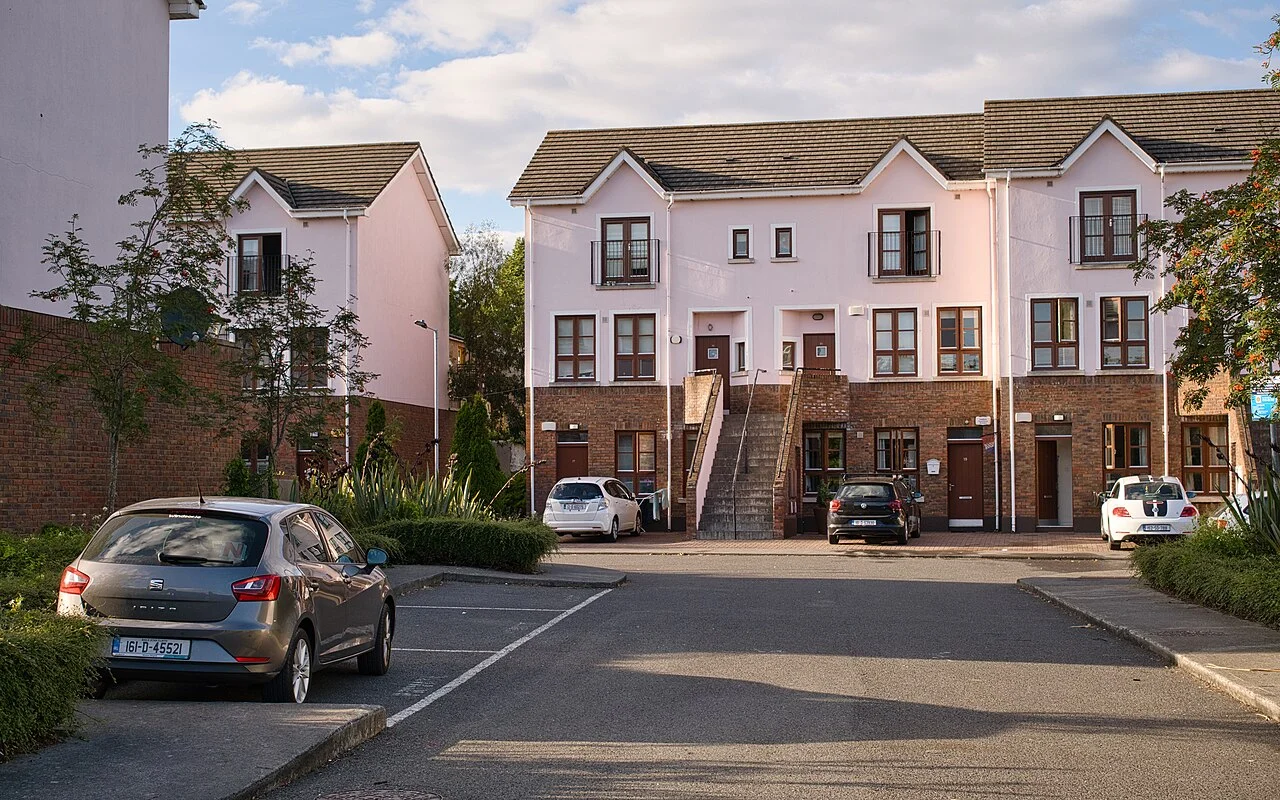 Photo: Chris Rycroft, CC BY 2.0
Stoneybatter/Cabra (D7) and Glasnevin/Drumcondra (D9) deliver the best combination of yield (7-8%) and capital growth (7-8% annually). These areas have strong infrastructure (Luas, bus, cycling corridors), quality housing stock, and demographic tailwinds from young professional demand.
Best for Capital Growth: Dublin 3 & South Dublin
Clontarf (D3) offers 6.5% yield on an area that’s rapidly approaching premium status (€403,881 median). Dublin 12 (Drimnagh/Crumlin) at 6.1% yield with 8.4% annual price growth represents the strongest appreciation play outside the traditional premium districts.
Best for Apartments: Inner City (D1, D2, D8)
If you’re buying apartments rather than houses, the inner city delivers. Dublin 1, 2, and 8 have the strongest apartment rental demand in the country, driven by proximity to employment centres and nightlife. Apartment gross yields of 7-9% are achievable at entry points of €200,000-€350,000.
Risks and Caveats
1. Tax Drag Is Real
Rental income is taxed at your marginal rate — up to 52% for higher earners. A 7% gross yield becomes 3.4% after tax, before expenses. REITs and institutional landlords benefit from more favourable tax treatment, which is one reason individual landlords have been exiting the market.
2. The Regulatory Environment Is Hostile
Ireland’s rental regulations increasingly favour tenant protections over landlord flexibility. The new 6-year rolling tenancies and 2% rent cap make it harder to adjust to market conditions. The number of individual landlords in Ireland has been declining for years — from ~170,000 in 2016 to under 140,000 in 2025.
3. Maintenance Costs in Older Stock
Many of Dublin’s highest-yielding areas (D10, D11, D12) have older housing stock that requires more maintenance. Factor in higher repair costs when calculating net yields.
4. Vacancy Risk Varies
Dublin’s overall vacancy rate is sub-1%, so void periods are minimal. But higher-rent properties in premium areas can sit vacant longer than affordable properties in high-demand areas. A month’s vacancy on a €3,000/month apartment costs you €3,000 — wiping out any yield advantage.
Data Sources and Methodology
- Sales prices: Property Price Register (propertypriceregister.ie), covering all residential transactions since 2010. Median prices calculated from all transactions by postal district.
- Rental data: RTB Rent Register (rtb.ie), containing registered rents from the last 24 months. Queried via RTB’s comparables API by Local Electoral Area, dwelling type, and bedroom count.
- Yield calculation: Gross yield = (average monthly rent × 12) ÷ median district purchase price × 100. This gives an area-level approximation — individual property yields will vary based on purchase price, condition, and specific location within the district.
- LEA-to-district mapping: RTB data is organized by Local Electoral Area (LEA). We map LEAs to postal districts using geographic boundaries: Ballymun-Finglas → D9/D11, Cabra-Glasnevin → D7/D9, Ballyfermot-Drimnagh → D10/D12, Kimmage-Rathmines → D6/D6W/D12, Pembroke → D2/D4, South East Inner City → D2/D4, North Inner City → D1/D7, Clontarf → D3.
All data current as of March 2026. Rental data from the RTB Rent Register reflects registrations from March 2024 to March 2026.
Want to check the rental yield for a specific Dublin property? Every property page on Dublish shows the last sale price from the PPR alongside comparable rental data from the RTB Rent Register for the same area — giving you a real-time yield estimate for any address in Dublin.