
Best Areas to Buy in Dublin 2026: Data-Driven Picks for Every Budget
Data-backed guide to the best areas to buy property in Dublin in 2026, covering first-time buyers, families, investors and commuters. Based on 200,000+ PPR transactions and RTB Rent Register data.
Where should you buy in Dublin in 2026? It depends entirely on who you are. A first-time buyer stretching for a two-bed in Drimnagh has a completely different answer than an investor hunting yield in Ballyfermot or a family choosing between Raheny and Glasnevin. “Best” means nothing without context.
So we scored every Dublin district using real data — not vibes, not estate agent optimism, not “up-and-coming” hand-waving. We combined over 200,000 Property Price Register transactions with the brand-new RTB Rent Register to rank areas across five dimensions: median price, annual price growth, rental yield, transport connectivity, and local amenities. Then we sliced the results by buyer type.
Here’s what the data says.
How We Scored Areas
Every ranking in this guide is built on the same data foundation we use across Dublish:
- Median purchase prices from the Property Price Register (PPR) — actual transaction prices, not asking prices
- Annual price growth rates calculated from compound annual growth across each district’s full transaction history
- Gross rental yields derived from RTB Rent Register data (actual registered rents) divided by PPR median prices
- Transport links scored by proximity to Luas, DART, Dublin Bus high-frequency routes, and motorway access
- Amenities including schools, parks, shopping centres, and healthcare facilities
We weight these differently depending on the buyer profile. First-time buyers care most about price and growth (building equity fast). Families prioritise schools, space, and parks. Investors focus on yield and capital appreciation. Commuters need transport links and value relative to journey time.
No single area wins across all dimensions. That’s the point — if there were an obvious best area, everyone would buy there and the price would adjust until it wasn’t.
The Quick Reference: Every District at a Glance
Before diving into buyer-specific recommendations, here’s the full dataset. Every Dublin postal district ranked by median price, with growth rate and gross rental yield side by side.
| District | Areas | Median Price | Annual Growth | Gross Yield |
|---|---|---|---|---|
| Dublin 6 | Ranelagh, Rathmines | €595,000 | 6.0% | 5.0% |
| Dublin 4 | Ballsbridge, Donnybrook | €550,000 | 4.9% | 5.6% |
| DLR | Dún Laoghaire, Dalkey, Blackrock | €535,000 | 6.0% | 5.4% |
| Dublin 6W | Terenure, Harold’s Cross | €520,000 | 5.8% | 5.7% |
| Dublin 14 | Dundrum, Goatstown | €512,000 | 6.0% | — |
| Dublin 18 | Foxrock, Cabinteely | €490,000 | 5.3% | — |
| Dublin 16 | Ballinteer, Knocklyon | €485,000 | 5.3% | — |
| Dublin 3 | Clontarf, East Wall | €404,000 | 6.5% | 6.5% |
| Dublin 2 | City Centre South | €395,000 | 4.1% | 8.6% |
| Dublin 5 | Raheny, Artane, Coolock | €385,000 | 6.8% | 6.5% |
| Dublin 13 | Donaghmede, Sutton | €370,000 | 7.0% | — |
| Dublin 9 | Glasnevin, Drumcondra | €356,000 | 6.7% | 7.3% |
| Fingal | Swords, Malahide, Balbriggan | €330,000 | 7.3% | — |
| Dublin 7 | Cabra, Stoneybatter, Phibsborough | €330,000 | 7.5% | 7.9% |
| Dublin 15 | Blanchardstown, Castleknock | €325,000 | 6.4% | — |
| Dublin 12 | Crumlin, Drimnagh, Walkinstown | €324,000 | 8.4% | 6.1% |
| South Dublin | Tallaght, Clondalkin, Saggart | €315,000 | 7.4% | — |
| Dublin 8 | Kilmainham, Inchicore | €305,000 | 7.4% | 9.2% |
| Dublin 20 | Palmerstown, Chapelizod | €295,000 | 6.5% | — |
| Dublin 24 | Tallaght, Firhouse | €290,000 | 7.0% | — |
| Dublin 22 | Clondalkin | €282,000 | 7.2% | — |
| Dublin 1 | North Inner City | €275,000 | 6.3% | 10.2% |
| Dublin 17 | Coolock, Priorswood | €256,000 | 7.5% | — |
| Dublin 11 | Finglas | €246,000 | 8.4% | 8.4% |
| Dublin 10 | Ballyfermot | €226,000 | 9.9% | 8.7% |
Yield data shown where RTB Rent Register comparables were available at time of analysis. Dash (—) indicates insufficient rental data for reliable yield calculation.
The pattern is immediately clear: cheaper areas grow faster and yield more. Dublin 10 leads on both growth (9.9%) and yield (8.7%), while Dublin 6 — the most expensive district — offers the lowest yield (5.0%) and middling growth (6.0%). This convergence effect is the defining characteristic of Dublin’s 2026 market.
Now let’s break this down by who you are and what you’re looking for.
Best Areas for First-Time Buyers
If you’re buying your first home in Dublin in 2026, your priorities are clear: get on the ladder at a price you can afford, in an area where your equity will grow. The Help to Buy scheme (extended to 2029) means first-time buyers can claim up to €30,000 in tax relief on new builds — a significant factor in areas with new developments.
Here are the districts where the data says first-time buyers should focus.
Dublin 12 — Drimnagh, Crumlin, Walkinstown
Median price: €324,000 | Growth: 8.4% | Yield: 6.1%
Dublin 12 is the standout first-time buyer pick in 2026. A median of €324,000 puts it well within reach of a couple earning €80,000 combined (borrowing 4x income = €320,000), and the 8.4% annual growth rate is the joint-highest in the city alongside Dublin 11.
What €350,000–€400,000 buys you here: a well-maintained 3-bed semi-detached in Crumlin or Walkinstown, or a renovated 2-bed in one of Drimnagh’s red-brick terraces. Gentrification is visibly underway — new cafés, craft beer spots, and young families are changing the character of streets that were overlooked five years ago.
Transport: Drimnagh sits on the Luas Green Line (Goldenbridge, Drimnagh, Blackhorse stops), putting you in the city centre in 15 minutes. Bus routes along the Crumlin Road connect to the IFSC and Docklands. The M50 is accessible via the Walkinstown interchange.
Schools: Well-served by primary schools including Scoil Mhuire and Our Lady of Good Counsel. Secondary options include Presentation College and Marian College. Not the highest-profile school district in Dublin, but solid and improving.
Dublin 11 — Finglas
Median price: €246,000 | Growth: 8.4% | Yield: 8.4%
The lowest entry point in Dublin proper. At €246,000 median, Dublin 11 offers something increasingly rare: a path to homeownership for single buyers. A single earner on €65,000 can borrow €260,000 — enough for a typical Finglas property with a small deposit.
What €250,000–€320,000 buys you: a 3-bed semi in established estates like Finglas West or Finglas South. Some need updating, but the bones are good — 1960s–80s builds with gardens, driveways, and room to extend.
Transport: The 40-series Dublin Bus routes run frequently to the city centre (25–35 minutes). Finglas is earmarked for future MetroLink connectivity, though delivery timelines remain uncertain. The N2/M50 interchange provides car access to the M50 orbital and northbound routes.
The case for Finglas: It’s growing at 8.4% annually — matching Dublin 12 — but from a much lower base. If that growth rate holds, a €246,000 property today could be worth €360,000 in five years. For first-time buyers willing to bet on trajectory over current polish, Finglas is the numbers play.
Dublin 15 — Blanchardstown, Castleknock
Median price: €325,000 | Growth: 6.4%
Dublin 15 is the family-friendly first-time buyer option. Blanchardstown Shopping Centre provides genuine suburban infrastructure (not just a Spar and a chipper), and the area has decades of established community.
What €350,000–€400,000 buys you: a 3-bed semi in Castleknock, Clonsilla, or Mulhuddart, or a newer 3-bed in estates like Hansfield. The €400,000 end gets you into Castleknock proper — one of Dublin’s best-regarded suburbs.
Transport: Hansfield and Castleknock train stations connect to Connolly/Pearse in under 30 minutes. Blanchardstown has comprehensive bus coverage. The N3/M50 interchange makes this one of Dublin’s best-connected western suburbs.
Schools: Castleknock has several highly regarded primary and secondary schools. Luttrellstown Community College and Castleknock Community College are popular choices.
Dublin 22 — Clondalkin
Median price: ~€282,000 (est.) | Growth: 7.2%
Clondalkin offers a similar value proposition to Finglas but with better transport links. The Red Luas line runs through the area, connecting to the city centre in about 40 minutes via stops at Clondalkin and Red Cow.
What €280,000–€350,000 buys you: a 3-bed semi in established estates, or a newer 2-bed apartment near the village. Clondalkin Village itself has genuine character — a round tower, a proper village centre, and an active local community.
Transport: Red Luas line (Clondalkin stop), plus connections to the Green line via Red Cow interchange. N7/M50 access for drivers. Bus routes into the city centre.
The honest take: Clondalkin doesn’t have the gentrification buzz of Dublin 12 or the rock-bottom pricing of Dublin 11, but it offers a solid middle ground — affordable, well-connected, and growing at 7.2% annually.
First-Time Buyer Summary
| District | Median Price | Growth | Best For |
|---|---|---|---|
| Dublin 12 | €324,000 | 8.4% | Couples, gentrification upside, Luas access |
| Dublin 11 | €246,000 | 8.4% | Single buyers, maximum equity growth |
| Dublin 15 | €325,000 | 6.4% | Families wanting suburban infrastructure |
| Dublin 22 | ~€282,000 | 7.2% | Transport links, established community |
Best Areas for Families
Families buying in Dublin optimise for different things: school catchment, garden size, parks within walking distance, and a neighbourhood where kids can ride bikes. Price still matters, but it’s weighed against quality of life.
Dublin 5 — Raheny, Artane, Harmonstown
Median price: €385,000 | Growth: 6.8% | Yield: 6.5%
Dublin 5 is one of Dublin’s best-kept secrets for families. Raheny sits between St Anne’s Park (the second-largest park in Dublin, over 100 hectares) and the coast — kids grow up with a beach and one of Dublin’s best playgrounds on their doorstep. Artane and Harmonstown offer larger houses at slightly lower prices, with Coolock to the north providing entry points around €362,000.
Schools: Excellent primary options including Scoil Áine and Springdale National School. On the secondary side, St Joseph’s CBS and Manor House are well-regarded. The school catchment is a genuine draw.
Parks & amenities: St Anne’s Park, Bull Island (UNESCO biosphere reserve), Raheny village, and proximity to Howth for weekend walks. The Greenway cycle path connects Raheny to Clontarf and the city centre.
Transport: DART stations at Raheny and Harmonstown (city centre in 20 minutes). Strong bus connectivity along the Howth Road corridor.
Dublin 9 — Glasnevin, Drumcondra, Whitehall
Median price: €356,000 | Growth: 6.7% | Yield: 7.3%
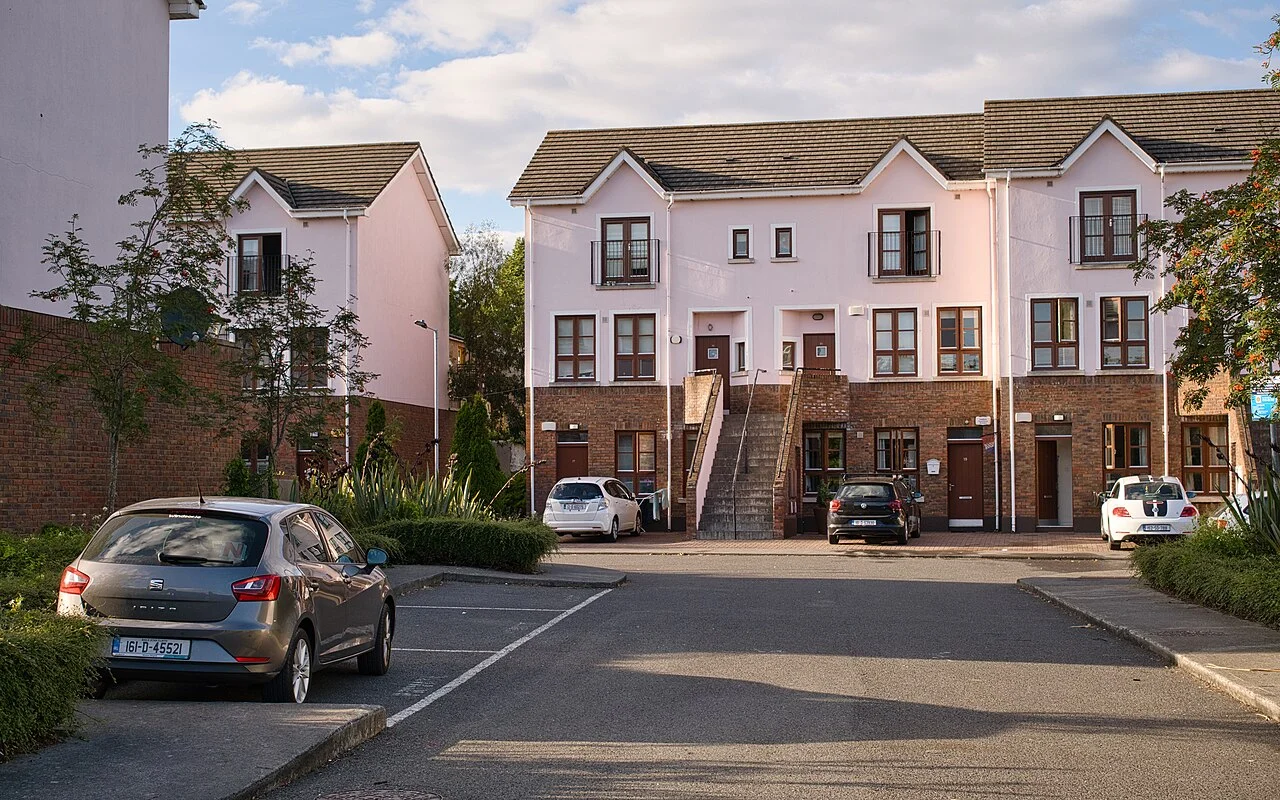 Photo: Chris Rycroft, CC BY 2.0
Dublin 9 combines academic prestige (DCU, the Botanic Gardens, Glasnevin Cemetery museum) with genuinely family-friendly streets. Drumcondra’s tree-lined roads and Glasnevin’s redbrick terraces offer the kind of established neighbourhood that takes decades to develop organically.
Schools: Home to several popular primary and secondary schools. Proximity to DCU is a long-term bonus for families thinking about third-level education.
Parks & amenities: The National Botanic Gardens is the headline act, but Griffith Park, Albert College Park, and the Tolka Valley Park add substantial green space. Glasnevin village has independent shops, cafés, and a strong community feel.
Transport: Drumcondra train station (to Connolly in 5 minutes). Multiple bus routes along Drumcondra Road, Ballymun Road, and Griffith Avenue. Excellent cycling infrastructure with protected lanes on several routes.
Dublin 13 — Donaghmede, Sutton, Baldoyle
Median price: €370,000 | Growth: 7.0%
Dublin 13 offers coastal living without the premium of Clontarf (Dublin 3, at €404,000). Sutton and Baldoyle have sea views, beach access, and proximity to Howth Head. Donaghmede provides more affordable options with family-oriented estates and the Donaghmede Shopping Centre.
Schools: Strong school infrastructure across the area, particularly in Sutton and Baldoyle. Howth Road secondary schools are well-regarded.
Transport: DART stations at Sutton, Bayside, and Howth Junction. The coastal DART ride into the city is one of Dublin’s most scenic commutes — 30 minutes of sea views beats 30 minutes in M50 traffic.
Fingal — Malahide, Swords, Portmarnock
Median price: €330,000 | Growth: 7.3%
Fingal is a vast administrative area, but for families, the Malahide–Swords corridor is the sweet spot. Malahide village is arguably Dublin’s most attractive coastal suburb — castle, estuary, independent restaurants, sailing club. Swords offers newer housing stock at lower prices, with Pavilions Shopping Centre and excellent motorway access.
Schools: Malahide has several outstanding primary and secondary schools. Swords has newer schools serving the rapidly growing population, including Educate Together and Gaelscoil options.
Transport: Malahide and Portmarnock are on the DART/Northern commuter line. Swords is the designated stop for MetroLink (when delivered). The M1 motorway and Dublin Airport are minutes away.
What €330,000 buys: In Swords, a 3-bed semi in a relatively new estate. In Malahide, you’d need closer to €450,000+ for a comparable property — the €330,000 median is pulled down by the more affordable areas within Fingal.
Family Buyer Summary
| District | Median Price | Growth | Key Draw |
|---|---|---|---|
| Dublin 5 | €385,000 | 6.8% | St Anne’s Park, coast, schools, DART |
| Dublin 9 | €356,000 | 6.7% | Botanic Gardens, DCU, community feel |
| Dublin 13 | €370,000 | 7.0% | Coastal, DART, Howth proximity |
| Fingal | €330,000 | 7.3% | Malahide village, new builds, MetroLink |
Best Areas for Investors
Investment buying in Dublin 2026 requires navigating the new rent control regime (more on that below). The key metrics: gross yield, capital growth, and entry price. Lower entry means less capital at risk and faster breakeven.
Dublin 10 — Ballyfermot, Cherry Orchard
Median price: €226,000 | Growth: 9.9% | Yield: 8.7%
The numbers king. Dublin 10 delivers the highest gross yield in Dublin (8.7%) combined with the fastest capital appreciation (9.9% annually). A €226,000 purchase generating €1,646/month in rent gives you a cash-flowing asset from day one — even after costs, this should deliver a positive net yield.
The trade-off: Higher management intensity. Older housing stock means more maintenance. Tenant demand is strong (sub-1% vacancy across Dublin), but the demographic profile differs from D4 or D6.
Investor math: €226,000 purchase, €19,752 annual rent, 8.7% gross yield. After LPT (€500), insurance (€1,200), maintenance (~€2,260, 1% of value), and assuming no mortgage: ~€15,792 net income before tax. At 52% marginal rate: ~€7,580 net after tax, or a 3.4% net yield. The capital growth does the real heavy lifting here.
Dublin 7 — Cabra, Stoneybatter, Phibsborough
Median price: €330,000 | Growth: 7.5% | Yield: 7.9%
Dublin 7 is the gentrification sweet spot we highlighted in our rental yields guide. The combination of 7.9% gross yield and 7.5% capital growth means you’re making money on both the income stream and the asset appreciation. Few Dublin districts deliver on both fronts simultaneously.
Stoneybatter and Phibsborough have transformed over the past decade — craft breweries, speciality coffee, independent restaurants — without losing their character. This attracts the kind of tenants who stay: young professionals, couples, postgrads at TU Dublin or the Mater Hospital.
Entry price vs D3/D5: At €330,000, Dublin 7 is €55,000–€75,000 cheaper than Dublin 3 or Dublin 5, with a higher yield and comparable growth. The data case is strong.
Dublin 1 & Dublin 8 — Inner City
Dublin 1: Median €275,000 | Growth: 6.3% | Yield: 10.2% Dublin 8: Median €305,000 | Growth: 7.4% | Yield: 9.2%
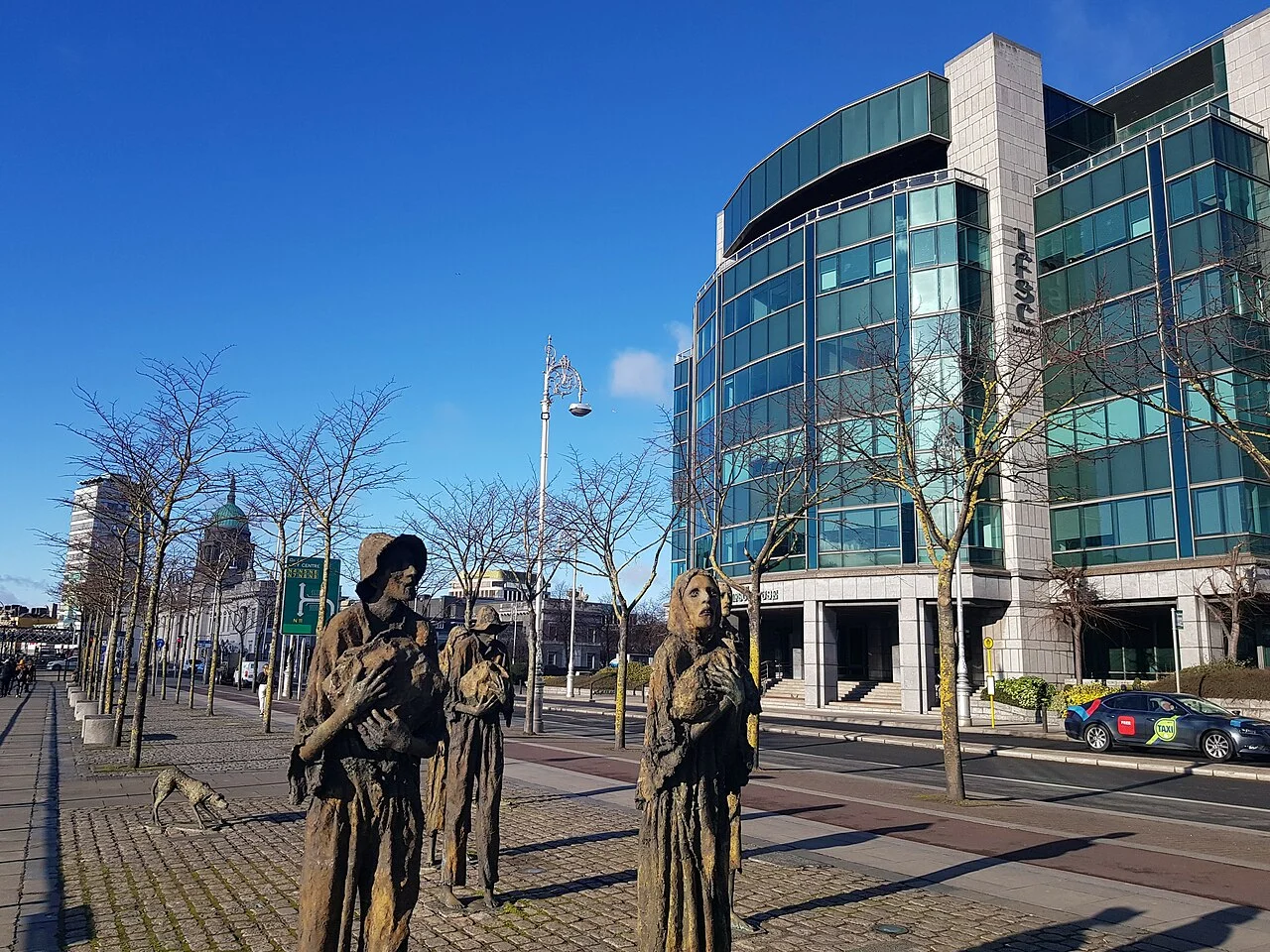 Photo: NTF30, CC BY-SA 4.0
The highest gross yields in Dublin are in the inner city. Dublin 1 (North Inner City — around the IFSC, Smithfield, Parnell Street) delivers 10.2% gross yield, while Dublin 8 (Kilmainham, Inchicore, the Liberties) comes in at 9.2%.
These are primarily apartment plays. One-bed apartments in the IFSC or Smithfield can be picked up for €200,000–€280,000, generating rents of €1,800–€2,200/month. The tenant pool is deep: city-centre workers, hospital staff, college students, and international professionals.
Caveats: Higher tenant turnover, management agent fees (7–10% of rent), and older apartment blocks with potentially rising service charges. These aren’t passive investments — they require active management or a good letting agent.
The Rent Control Factor
From 1 March 2026, rent increases on existing tenancies are capped at 2% annually (or CPI, whichever is lower). This fundamentally changes the investor calculus:
- Your Day 1 yield is roughly your long-term yield. Don’t buy expecting rents to catch up to market rates — they can only grow at 2%.
- Market resets between tenancies. When a tenant leaves, you can reset to market rent. But with average tenancy lengths of 3–4 years, these resets are infrequent.
- The RTB Rent Register is your friend. You must justify rents against 3 comparable properties from the register. Check comparables on Dublish before purchasing.
This regime makes buying at the right yield more important than ever. The areas above — D10, D7, D1, D8 — offer yields that work even with capped growth.
Investor Summary
| District | Entry Price | Yield | Growth | Play |
|---|---|---|---|---|
| Dublin 10 | €226,000 | 8.7% | 9.9% | Maximum yield + growth |
| Dublin 7 | €330,000 | 7.9% | 7.5% | Balanced yield + gentrification |
| Dublin 1 | €275,000 | 10.2% | 6.3% | Highest yield, apartment focus |
| Dublin 8 | €305,000 | 9.2% | 7.4% | Inner city, strong demand |
Best Areas for Commuters
If you work in Dublin’s city centre but can’t (or don’t want to) afford to live there, the commute equation is simple: value per minute of travel time. Here’s where the data says commuters should look.
Dublin 22 — Clondalkin (Luas Red Line)
Median: ~€282,000 | Growth: 7.2% | Commute: 35–40 min to city centre
The Red Luas line runs through Clondalkin, making it one of the most affordable rail-connected suburbs in Dublin. The Clondalkin and Red Cow stops connect to Jervis/Abbey Street in about 40 minutes — or to Heuston in under 30. The Red Cow interchange links to the Green line for south-side commuters.
For drivers, the N7 and M50 provide motorway access, though rush-hour congestion on the N7 approach is a known pain point. Off-peak, you’re in the Docklands in 25 minutes.
Dublin 12 — Drimnagh, Crumlin (Luas Green Line)
Median: €324,000 | Growth: 8.4% | Commute: 15–25 min to city centre
Dublin 12’s proximity to the city centre is its commuter superpower. Drimnagh’s Luas stops (Goldenbridge, Drimnagh, Blackhorse) put you in St Stephen’s Green in 15 minutes. Crumlin and Walkinstown are a short bus ride from Rathmines and the city centre. For a district with a median of €324,000, the commute time is remarkable — many D4/D6 residents have longer door-to-door journeys.
This combination of price, growth (8.4%), and commute time makes Dublin 12 arguably the best-value commuter district in Dublin.
Dublin 15 — Blanchardstown, Castleknock (Rail + Bus)
Median: €325,000 | Growth: 6.4% | Commute: 25–35 min to city centre
Castleknock and Coolmine train stations provide a direct line to Connolly/Pearse, while the 39/39a bus routes are among Dublin Bus’s most frequent services. Blanchardstown also sits on the N3/M50 corridor, providing good road access to the north and west of the city.
The upcoming BusConnects network redesign promises improved orbital routes from Dublin 15, reducing the dependency on radial commutes through the city centre.
Dublin 24 — Tallaght, Firhouse (Luas Red Line)
Median: €290,000 | Growth: 7.0% | Commute: 40–45 min to city centre
Tallaght is the southern terminus of the Luas Red Line, with multiple stops serving different parts of the area. At €290,000 median with 7.0% growth, it offers strong value for Luas-connected living. Firhouse and Knocklyon are slightly further from the Luas but offer quieter, more established suburban living.
Commuter Summary
| District | Median Price | Commute | Mode |
|---|---|---|---|
| Dublin 12 | €324,000 | 15–25 min | Luas Green |
| Dublin 15 | €325,000 | 25–35 min | Rail + Bus |
| Dublin 22 | ~€282,000 | 35–40 min | Luas Red |
| Dublin 24 | €290,000 | 40–45 min | Luas Red |
Where to Think Twice
Not every area makes sense for every buyer. Here’s where the data suggests caution — not because these are bad areas, but because the value proposition doesn’t stack up for certain profiles.
Premium Areas for Investors
If you’re buying for yield, Dublin 4 (5.6% gross), Dublin 6 (5.0% gross), and Dún Laoghaire–Rathdown (5.4% gross) are poor choices. After costs and tax, net yields drop to 1.5–2.5%. At a €550,000–€595,000 entry price, you’re tying up significant capital for minimal income. These are capital appreciation plays — you’re betting on the asset value rising, not the rent paying the bills.
If capital growth is your strategy, that’s fine — D6 has grown at 6.0% annually, so a €595,000 property gains ~€36,000 in value per year. But you can get similar or better growth rates in D7 (7.5%) or D12 (8.4%) at half the price.
Areas with Slower Growth
Dublin 4 (4.9% growth) and Dublin 2 (4.1% growth) are growing more slowly than the city average. These established markets have less room for price discovery — they’re already priced at what buyers are willing to pay. For buyers focused on equity growth, the northside and western suburbs consistently outperform.
The Commuter Belt Trade-Off
Areas like Dublin 24 (Tallaght) and the outer Fingal suburbs (Balbriggan, Rush) offer the lowest prices but at the cost of longer commutes and fewer amenities. A €190,000 property in Tallaght that requires 50 minutes each way to your office isn’t necessarily better value than a €324,000 property in Drimnagh that’s 15 minutes from the city centre. Factor in transport costs, time value, and quality of life — not just the sticker price.
The Dublin Property Market in 2026: What’s Changed
Several significant shifts make 2026 a different market from 2024 or 2025.
The New Rent Control Regime
The Residential Tenancies (Miscellaneous Provisions) Act 2026, effective 1 March, replaces the old Rent Pressure Zone system with national rent control:
- 2% annual cap on rent increases (or CPI, whichever is lower)
- Market rent resets permitted between tenancies and every 6 years
- RTB Rent Register comparables required to justify rents
- Rolling 6-year tenancy cycles replacing Part 4
For buyers, this means rental income is more predictable but less dynamic. For owner-occupiers, it has limited direct impact — but it influences the supply side, as some landlords exit the market, potentially freeing up properties for sale.
The RTB Rent Register
Launched 1 March 2026, this is Ireland’s equivalent of the Property Price Register for rentals. For the first time, actual registered rents are publicly available — not asking prices from Daft.ie, but what tenants are legally paying.
Dublish integrates this data on every property page, giving buyers an instant yield estimate based on real comparable rents. This is a genuine informational advantage that didn’t exist before March 2026.
Help to Buy Extension
The Help to Buy scheme has been extended to 2029, providing up to €30,000 in tax relief for first-time buyers purchasing or self-building new homes. This continues to support demand in areas with new developments — particularly Dublin 15, Fingal, South Dublin, and Dublin 22, where new estates are actively being built.
Where the Market Is Heading
Dublin house prices grew 6.5% in 2026, continuing the post-2020 trend of sustained growth. The fundamentals haven’t changed: housing supply remains constrained (completions running well below estimated demand), population is growing, and employment is strong, particularly in tech and pharma.
We’re not in the business of forecasting — the data tells us what is, not what will be. But the structural supply deficit suggests continued price pressure, particularly in the affordable and mid-range segments where demand is most acute.
How Dublish Helps You Make Better Decisions
Every property page on Dublish combines two things no other Irish property site brings together:
- PPR transaction history — what the property (and its neighbours) actually sold for
- RTB rental comparables — what similar properties in the same area are renting for right now
This means you can check the yield potential of any Dublin property in seconds, compare prices against the area median, and see exactly how the neighbourhood has performed over time. Data-driven decisions, not gut feelings.
Methodology & Data Sources
- Sales data: Property Price Register (propertypriceregister.ie) — 200,351 Dublin transactions across 25 postal districts and 146 neighbourhoods. All residential sales since 2010.
- Rental data: RTB Rent Register (rtb.ie) — registered tenancy rents from March 2024 to March 2026, queried by Local Electoral Area, dwelling type, and bedroom count.
- Growth rates: Compound annual growth calculated from each district’s full transaction history.
- Prices: Median values (not averages) to prevent skewing from outlier transactions.
- Yield calculation: Gross yield = (average monthly rent × 12) ÷ median district purchase price × 100.
- Transport and amenity scoring: Based on proximity to rail stations (DART, Luas, commuter rail), high-frequency bus routes, primary/secondary schools, and public parks.
All data current as of March 2026.
For the full price breakdown across every district and neighbourhood, see our Dublin House Prices by Area 2026 guide. For a deep dive into rental yields, investor returns, and the new rent control regime, read our Dublin Rental Yields by Area 2026 guide.
Explore the full data: Dublin Districts → | Compare Areas → | Price Trends →